An inbox full of receipts. A clearer picture.
An email-to-insights product that turns receipts and invoices into structured financial transactions, with resilient sync and a companion mobile experience.
 AIRTAILLIVE BETA
The challenge.
Receipt emails vary by merchant, format and language. The same purchase can appear in several messages, providers impose quotas, and a large inbox cannot depend on one uninterrupted request.
What I built.
I built Airtail across the web interface, email integrations, transaction pipeline and mobile API. Its architecture combines deterministic extraction for known patterns with model-based handling for ambiguous messages.
- ↗︎Rules-first extraction with model fallback
- ↗︎Resumable, chunked email sync
- ↗︎Web product and companion iOS app
The decisions behind it.
Use a model where it adds value
Rules handle recognisable receipt patterns before the AI extraction stage. The ambiguous remainder goes through a model fallback chain with bounded output and parsing.
Resume instead of restart
Chunked sync jobs use checkpoints, provider cursors, heartbeats and retries. A provider failure or quota limit should not force an entire inbox to start again.
Separate identity from access
Application authentication and email-provider access are distinct concerns. Provider-specific integrations, user-associated records and deduplication support the data flow.
What matters most.
The best AI pipeline is not necessarily the one that calls a model most often. Deterministic work, resumability and careful validation make the product more dependable.
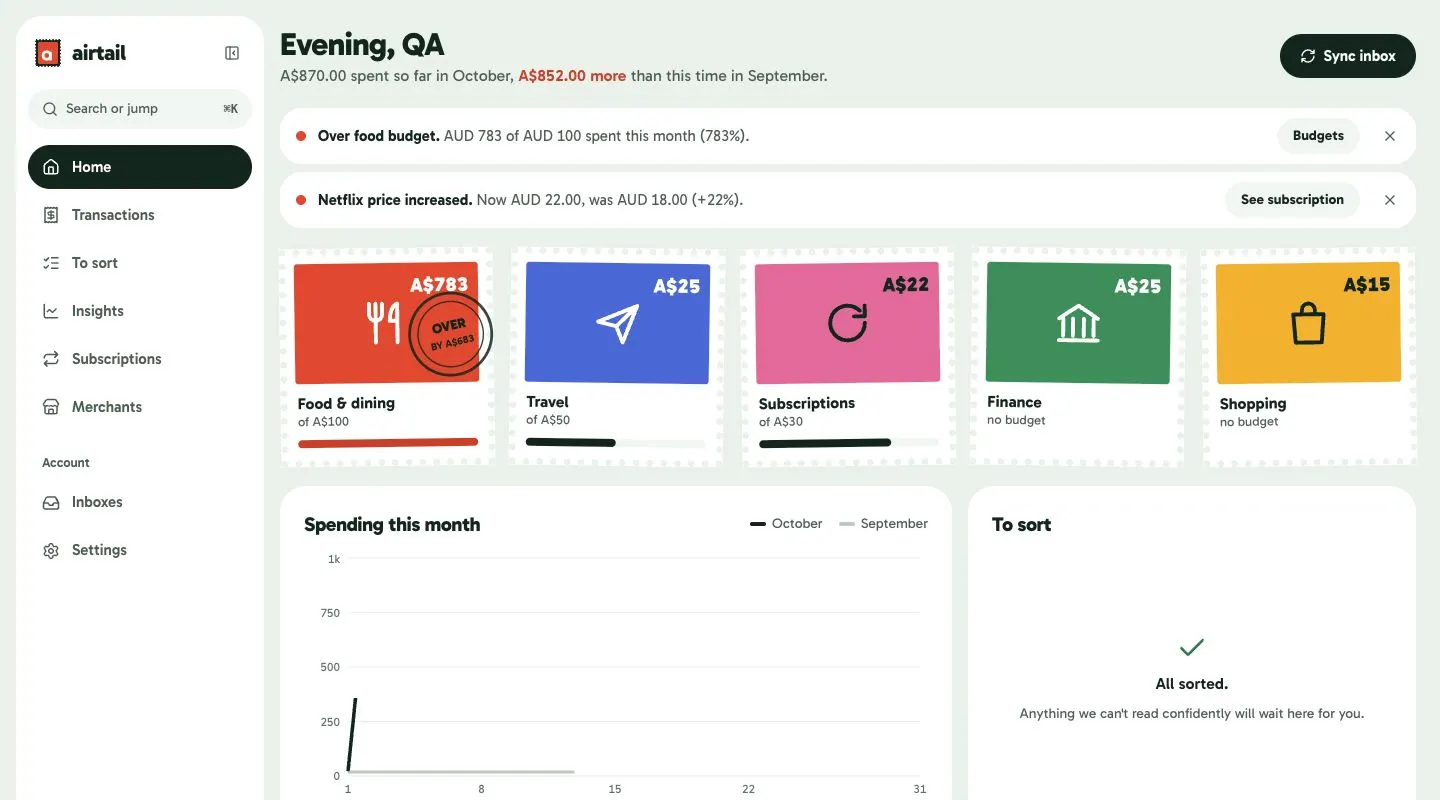
Airtail is an independent project with private source code. The screenshot shows a test account with demo data. The portfolio lab is a standalone demonstration of the pattern, not Airtail’s production pipeline.